In the 1950's people wondered what the future generations would do with all their free time. They predicted, correctly, that worker productivity would rise immensely. They also assumed that people would be just as wealthy while working much less.
People are wealthier in some ways. In america, its pretty much standard issue to own at least one car (partially perhaps because a car is needed to simply get a job in most areas).
But in other ways it does not seem like the average worker is as well-off as the past had predicted.
I could say things about concentration of wealth and other reasons the productivity gains were not matched by gains in free time, but I'm not sure I know enough to make those arguments.
This is just my uninformed opinion, but I think a lot of it has fallen victim to keeping up with the Joneses, and a lot of the rest to employers not being willing to give decent terms to part timers.
People could get by with a much smaller salary (or keep the same salary but save a ton of it) by having an older car, a smaller house, less fancy food, etc. but everybody else has nicer things. I see people buying really nice cars on credit and then they don't have much time to drive it recreationally because they spend all their time working to pay for it. "Well there's your problem!"
For the other side, let's say I make $X but only need $X/2 to live. Try finding an employer who will let you work half time for $X/2. It's pretty tough, especially if you make $X at something "professional", rather than, say, digging ditches. Worse, for Americans, is the current link between employment and health care. Half-time employment generally means having to buy your own health insurance, which doesn't come cheap.
In short, it seems like it's pretty hard to work less and make less, and when you do work full time and make good money, it's very tempting to spend a larger portion of it on luxuries.
There is an interesting article on Bloomberg about this exact thing. Americans have converted the extra productivity into consumer possessions, while other countries (read Scandinavia/Northern Europe) have converted them into increased leisure time.
I was about to say this. Also, in Scandinavia the salaries _have_ indeed kept pace with increases in productivity. In Norway, you can earn a decent living as a checkout clerk. It seems as if the business owners here have actually passed on most of the savings to their workers. I'm pretty sure this is exclusively a cultural phenomenon - a sense of solidarity and cooperation which the larger part of US culture does not have. (I'm not meaning to bash the United States here, but this view is compounded by the fact that American employee-employer relationships seem a lot more antagonistic and imbalanced).
There are also less super-rich people here since people are overall taxed more. The oil industry also adds to the general income level, but this doesn't explain the entire effect. I'm pretty sure the same can be observed, in Sweden and Finland.
I have a better explanation. Wages have not even remotely kept pace with productivity, so most people do not see the benefits of increased overall productivity.
I'm curious.... if productivity increases rapidly in all sectors then how are wages supposed to increase as well?
The theory is that employees should be paid more for producing more value per head. However if everyone produces more then wages can't go up without a corresponding increase in prices.
The alternative is reduced prices, new improved goods and services, and a steady wage giving the misleading sentiment of "everything is getting better, but I'm still being paid the same".
Why do prices have to go up with productivity? To take a toy example, let's say that the entire economy consists of nothing but producing TVs, and that enough TVs are produced for each person to have one TV per year.
Now some massive productivity increase comes along and doubles output with the same workers. Now you're producing enough TVs for each person to have two TVs per year. Either the price of TVs will drop by 50%, or salaries will double. (Or half of the workforce will be fired....) Approximately. If everyone produces more then everyone has to be able to buy more, otherwise there's no reason to have the additional production in the first place.
If that is the case, then you would expect to be able to make more money by starting your own business, because you start to reap all the rewards (and take on more of the risk).
My theory? Well somebody has to pay for all the useless people (Washington employes a ton of them and so do nearly all large companies in the world).
For the other side, let's say I make $X but only need $X/2 to live. Try finding an employer who will let you work half time for $X/2. It's pretty tough, especially if you make $X at something "professional", rather than, say, digging ditches.
Rather than working ~20 hours a week, work ~40 hours a week, half your life.
...except nobody can tell me accurately when half of my life is over so I can retire at the right time.
Note particularly that statistics only work when applied to large enough populations. I will not be 70% dead at 70, I'll either be 100% dead or 0% dead.
...except nobody can tell me accurately when half of my life is over so I can retire at the right time.
So work 40 hours/week for until you pile up enough money to buy a lifetime annuity, and let the insurance company do the averaging over large populations.
That's certainly more viable, but requires much more discipline (to avoid spending the extra money too early) and is probably less beneficial as well, due to diminishing returns and such.
Look at it from the employer's perspective: in professional and technical occupations a half time worker isn't much cheaper than a full time worker due to benefits, training, administrative overhead, office space, PCs, etc.
it does not seem like the average worker is as well-off as the past had predicted
Well, we may not all be working 8-hour weeks and vacationing in Hawaii and Mexico, but the simple truth is that people on average are a lot better off than in the past. The only stat I have in my head right now: Infant mortality has dropped from 2.6% to 0.6% since 1960.
A hundred years ago, poor people had dirt floors. That's unheard of today, except among the utterly destitute.
There hasn't been quite the flexibility and utter non-dependence on material livelihood that techno-utopians predicted, though. By some estimates, we've had something like a 50x productivity improvement during the 20th century. If you assume that in 1900 the average person was a subsistence farmer (a conservative assumption), spending 100% of their time to earn basic shelter and 2000 calories/day, then with 50x productivity improvement, someone should be able to get basic, 1900-style food/shelter by working only 2% of a full-time job, i.e. almost negligible work, only a few days a year. Hence the widespread predictions made by early-20th-c authors that by 2000, basic needs (shelter/food) would be essentially free.
But obviously that hasn't happened: there is no real route by which I can put in 2% of full-time work, which by productivity gains is supposedly equivalent to 100% of 1900's full-time work, and live a basic 1900-era lifestyle. If there were, a lot of homeless people would take that option, working one week a year and earning themselves basic 1900-era accommodations/food.
It's just not an option you can actually pursue. Heck, even if you want to take some of the productivity gains in quality improvements: let's admit you don't have the option today to live like a 1900-era citizen, but have to, at a minimum, live 10x better. Then I should still be able to live ten times as well as the average 1900 citizen while putting in only 20% of a full-time job's worth of labor, thanks to that 50x productivity improvement. But that isn't really an option, either. Instead it seems that, if that 50x figure is indeed real, the only way to realize it is to take the dividend as material wealth, living 50x better rather than putting in less labor.
The main reason it's not an option is because virtually no-one is interested in early 1900's style living in exchange for lots of free time. Most of the system's constituants want more, and to improve the lives of their children, so the system is not designed to accomodate the 1-week-a-year worker. It's hardly intentional- I can think of very few steady jobs that don't require at least a week just to get into the swing of things!
Now, if you worked at a good job that is actually 50x as productive (a waitress is probably not 50x as productive today as she was 100 years ago) I'd wager that you could work there for 1 year and live 1900's-style for the next 49, as I'm pretty sure 1900's-style subsitence farming is far more spartan than most people imagine.
Hmm. I'd dispute that. We now have cellular phones, computers and the Internet, cars that are far safer and more efficient, 43" plasma TVs with 500 channels, iPads...
You might say "well, those are all gadgets." Fine, but if you cut all of those out of your life you'll probably save more than $3000 per year. That itself is a huge boost for the average worker.
If you cut all those out of your life, you don't have a job anymore.
Cell phones, cars, computers, internet... these aren't luxuries. These are mandatory investments that people have to make in their career. Investments they have to make out of their own pocket.
Try getting a job without a phone. Doesn't work.
If I was a retired millionaire I could cut them out.
You don't need a mobile to have a phone. On the extreme side, you could take public transportation everywhere, use the Internet at the library when you needed it and just have home phone service. This is actually sufficient for most jobs in a lot of places, though it is a lot less convenient.
If you want slightly more convenience, you can (for example) get a decent car that will take you from point A to point B for about $5000.
In the end, you really are mostly paying for convenience.
You are so out of touch. Most people I know who are having trouble either have no car or a $400 beater car. A $5000 car would be considered lavish.
You have a trust fund or something don't you?
A mobile phone is absolutely a requirement to get a job. Employers expect you to have it and expect you to answer when they call. Guess what happens if, after a job interview, you don't answer your call.
"Sorry boss, I was at the grocery store." is not an excuse.
"Sorry boss, I was on the toilet" is not even an excuse.
You either answer or you don't get the job.
Guess what happens if, at a $12/hour job, you don't answer your phone and come in for extra shifts when they are short workers? They take away your hours. They financially punish you.
You've never tried going without the internet if you think the library is a substitute. Employers require you to have email and web access from home, and they don't accept, "Sorry boss I didn't read your email yet. I haven't had a chance to get down to the library. It takes while on public transport you know" as an excuse.
My last job paid $9.10 an hour and I was expected to review my email daily as well as visit the company website occasionally to do these little quizzes and courses. The public library closes at 6pm. It wouldn't even be possible for me to get there.
Try going into a job interview and telling them you can't be reached instantly by email or phone at any time. See what happens.
You sound like Marie Antoinette. "The unemployed can just get a $5000 car! What the hell are they complaining about?"
Frankly, I think you're out of touch. I don't have a trust fund, and I acknowledge that there are people to whom my statements do not apply. I pretty explicitly said I was talking about the common case, which is not "unemployed and looking for a $10/hour job." You are talking about a very specific situation which is much poorer than average, statistically speaking.
Anyway, though, I suggested that $5000 car (which is a once-a-decade splurge) as a convenience. I explicitly said that. Many people, including me, have made do with public transportation or lousy cars (at a $10/hour job, yes — this is from experience). I still maintain that there are much cheaper options than the "plasma TV, high-speed Internet, cell service" lifestyle that was under discussion here. For example, you definitely don't need TV, and if you're looking fo a job and really need a phone, you can get a prepaid one for like $10 without committing to an expensive plan.
And it is simply not my experience, nor that of anyone I know (who range from unemployed to poorly employed to very gainfully employed) that hiring managers will not wait a few minutes for you to call back. Has that actually happened to you a lot? I believe it happens sometimes, but again, I don't believe that is the common case.
If you really work for somebody that horrible for $9.10 an hour, I would urge you to seek alternative employment at someplace like Subway, Albertsons or Starbucks, where they have similar compensation and in my experience they tend to treat people better than that.
Also — and I mean this sincerely, not to be snarky — I would suggest you look at how you approach people, because frankly you come across as rather hostile and negative. I understand you find your situation frustrating, but you need to try to stay positive. That will impact your chances of landing a job much more severely than your ability to answer an email within 30 seconds of it being sent.
Anyway, best of luck to you, whether you agree or not.
Do you realize that there is almost 20% real unemployment?
This means that employers who are actually hiring have so many applicants, if you don't answer the phone, they just go to the next applicant.
This isn't the Google hiring process. This is where there are 50 applications for a single opening at a crappy part time customer facing service job like the McDonald's drive-through.
You really have the wrong image of me. I'm not some highly paid Silicon Valley engineer, I'm a newspaper editor who happens to enjoy making software. Many of my friends work retail (e.g. cashiers) or just above (e.g. bartenders). Many people close to me have been homeless within the past several years. Believe me, I know how it is. I still think you're exaggerating the degree to which you are screwed if you don't have all the latest technology.
The point is that most devices that would have been a luxury some time ago are merely a way to keep up with certain demands of the society today. Just because you didn't have a cell phone 15 years ago and have one now doesn't automatically mean your life quality became higher in this respect. Because life is different. (BTW, landline phones are more expensive. They are the luxury now.) That was grandparent's point, and I do not believe you've presented a convincing argument against it.
I felt that the GP's point was a little stronger than the one you're making here. If you're just saying that society has adjusted to incorporate these new technologies, yes, that's true. I don't mean to argue against that. Not having a cell phone is a greater inconvenience nowadays than it was in the '50s, but I still think you're overstating things if you say you need one, and definitely if you say you need one that costs anywhere in the ballpark most people pay (one friend of mine makes about $700 a month and pays $80 of that for her phone). If you're paying more than like $5 a month, you're paying for convenience.
And thanks for the correction on landlines. It's been forever since I had one, so I didn't know how much they cost these days. My bad on that one.
I respect the particulars of your situation but it is not standard.
I own a manufacturing company with >100 employees, a mix of manufacturing and office/service jobs, and I don't expect answers from home from anyone except a couple top execs and the sales team, who are all based out of their home anyway and have company provided smartphones.
According to benchmarking data our company is not lavish, pays competitive wages but not way over the market, and has good productivity numbers.
Most jobs available right now are customer facing service jobs. They give a typical employee 32 hours per week to avoid being legally required to treat them as a full time employee, and they change the shifts on a week to week basis. Good employees are rewarded with more hours or better shifts, while bad employees are punished by reducing their hours or giving worse shifts. They expect you to answer the cellphone and come in to do extra shifts when they are short-staffed, and you must apply online through their website and then come in for an interview where you dress well.
They expect you to get there on your own which in many cities means a car is necessary. They ask if you have a car on their website application forms, and they mention that a car is not mandatory. You are statistically more likely to be hired if you display signals on the application form that indicate you are wealthy or higher class, which gives people who don't really need the job an advantage in the hiring process (such as high school students).
If you take sick days, they will reduce your hours to punish you, but of course will never tell you that that is why because it is illegal. But all employees understand that this is the situation.
For the record, I'm not in this situation. I'm one of the wealthy people who decided to work a $9.10/hour job by choice, for fun. I don't work there anymore -- early retirement. But I have lots of friends who are in this position. Usually they are there because their parents are poor and had major issues. Many of the people in these situations suffer from mental health disorders but cannot afford treatment.
If I'm angry at the silver spoon people on hacker news it's because I was raised to believe that technology would liberate humanity and create a world with no poverty and limited human suffering. But instead I have discovered that technology has been used by an elite to enslave the vulnerable.
They live tiny compartmentalized lives dominated by oppressive faceless systems that exploit them at every turn. Every injustice is accepted with resignation to the fact that the dejected human cannot even beg the system for mercy, because robots have no feelings. The bank algorithms charge $40 non-sufficient fund fees when the rent check on Monday is withdrawn, even though the paycheck was deposited Friday, because some bank algorithm re-arranges the order of the deposits to ensure there will be a fee. The worker is told not to complain about this -- when they opened the account they accepted the agreement which indicated that this could be a possibility.
Instead of the whips of slave-masters, faceless corporate "policy" and computer algorithms are the overlords that teach them their worthlessness. They are told to cheer up by the self-absorbed on HN, and they learn that it is essential that they lift up the corners of their mouth and pretend to love their slavery in order to pay the ever expanding grocery bill.
This is your high tech society. It's a society of faceless high tech oppression, a society where the hungry have jobs and internet but cannot afford food, a society where there is abundance but corporate policy says that only rich people are allowed to eat.
A society where when the dejected and pitiful complain for help, they are told to cheer up, at least they have cell phones and internet. But they can't eat their cell phone, and they also can't trade it for food.
For the record, most of the poor people I know do not have plasma TVs or cable. They would gladly trade their cell phones and internet for more food and shelter IF they could function in society without a cell phone or internet. But you can't. They are not luxuries, they are mandatories.
Wait. I thought we lived in a world where a staggering majority of the 7 billion people now alive (an absolutely unprecedented population level) manage to have more than enough food to eat from day to day. A world that largely has forgotten what true food insecurity is like. A world that pushes the limits of the world's carrying capacity. A world that is the product of the most efficient, integrated systems mankind has ever built to extract the world's resources.
So how can this be true while we also apparently have been enslaved by computers and corporate overlords who refuse to let us eat?
My conclusion:
1) You use the word 'slavery' very loosely.
2) You ignore the ability of population increases to nullify productivity gains.
3) You have let your emotions overpower your thoughts and so instead of analysing issues you rant.
There is still food scarcity today, and there doesn't need to be. There is still environmental destruction today, and there doesn't need to be. Freedom, democracy and prosperity came about with enlightenment philosophy, but computer technology has actually caused a reduction in freedom and prosperity for Americans. This is a problem.
My rant would not have been made 40 years ago in this country. Things have gotten worse in this country.
Most people on HN are 1-3 sigmas on the right side of the IQ bell curve. They have a hard time understanding what life is like on the other side (although rampant off-shoring and H1B wage gouging might, one day, engender some horizon broadening).
It's just a question of degree. Is height solely determined by genetics? No - we know that nutrition plays a large part. But potential height is still dominated by genetics. It doesn't matter whether or not he eats his Wheaties, the average kid is not going to grow up to be Shaq, period.
Ditto for intelligence. Things like iodine and breast feeding seem to be capable of boosting IQ by a few points each. Doubtless there are other factors. And yet, there is little reason to doubt that there is a genetic ceiling to any given person's potential IQ, at least if you accept that IQ stems from physical properties - in which case, how could it be exempt from genetic determination?
This is reality, and there is little hope of improving the lot of those who did not win the genetic lottery without first accepting that there is, in fact, such a lottery.
Just a precision. I see two questions of interest when talking about whether height and IQ come from genetic or environmental factors.
The first question is, how much of the currently observed variability in height (and IQ) is explained by genetic factors and environmental factors respectively? Meaning, how much of a lottery genes actually are?
The second question is, how could we take control of the variability? Meaning, how much could we deliberately influence height (and IQ) through genes and environment respectively?
By itself, the first question is of high academic interest, and low practical interest. The second question is just the opposite. But more important, those two questions should be treated separately, so everyone knows what we are talking about.
>My last job paid $9.10 an hour and I was expected to review my email daily as well as visit the company website occasionally to do these little quizzes and courses.
You had to do your company training on your own time? This is ridiculously exploitive. Surely there is a class action lawsuit here? Walmart got in trouble for making people work off the clock.


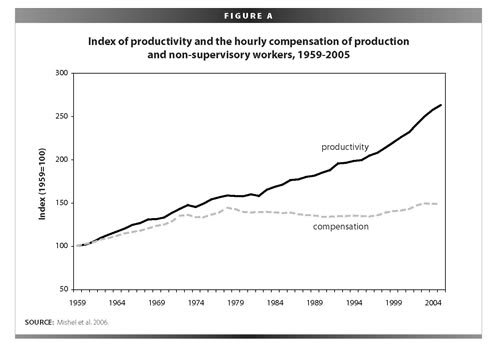
In the 1950's people wondered what the future generations would do with all their free time. They predicted, correctly, that worker productivity would rise immensely. They also assumed that people would be just as wealthy while working much less.
People are wealthier in some ways. In america, its pretty much standard issue to own at least one car (partially perhaps because a car is needed to simply get a job in most areas).
But in other ways it does not seem like the average worker is as well-off as the past had predicted.
I could say things about concentration of wealth and other reasons the productivity gains were not matched by gains in free time, but I'm not sure I know enough to make those arguments.