This is a person that should have never been in a leadership position. I have worked under these types of people that were great engineers themselves but couldn’t lead worth shit.
No trust in the team. Always doing shit themselves. No discussion. Backdoor discussions. Always bending to the will of management. Everything is “important”/“critical”. It’s micromanaging to the worst degree.
At the same time, I would likely fail in the same way if given the position. Albeit, to a much lesser degree. I think management often puts us in these impossible positions without any good reason other than “to look good to X.” What’s even worse if it’s was just to earn fucking brownie points with some no name mid level director.
This is why I think unions in tech would be great. To set realistic expectations, approach management from a collective point of view.
Unfortunately companies today only aim to get that VC money with a quick exit and IPO. I think the general sentiment amongst the vultures is a union would make the quick exit less of a reality.
This happens all the time because management is viewed as a promotion so you reward your best developers by giving them a job where they might suck and/or hate it. I think there are 2 big levers you need to address it:
1. Dual career ladders. You should recognize/reward some level of technical role (i.e. staff or similar) the same as management. Every senior person is a leader; I argue ICs have a tougher job because they don't have the "because you report to me" hammer.
2. Lead mentorship program. Potential managers need experience; you need to coach and validate. They need a chance to manage a single person over time, do a performance review cycle, 1:1s, feedback conversations,etc. Co-ops/iterns are great for this because it's a fixed time period! You need 3 conditions to promote someone into management: 1. the need, 2. the individual's desire, 3. the individual's skills & experience. An LMP gives you signal on all.
I'll add 1(b): People need to be able to move laterally between ladders. This is in everyone's best interest; having an amazing staff dev muddling through as a team lead just means they're going to quit soon.
This is a REALLY LONG way of saying I agree with the parent, but the solution is both known and doable. I'll get down off my soapbox now.
Management of course thinks that management is promotion from non-management and they manage the promotions. They are managers because they are better. How would they otherwise rationalize their higher salaries and power over other people?
Don't say "the organization has just promoted". That's taking the face off of where the blame belongs.
Say, "the CEO". The same CEO who is trying to manage through deadline pressure, placed into leadership someone who could be managed through deadline pressure. And who would transmit that pressure down the chain.
Why? Because the CEO believed that this is how people should be managed. Which means that a leader who refused to accept that pressure would have almost certainly resulted in the CEO replacing said leader with someone who is more compliant.
And now that we're done placing blame in the right place, can we talk about the actual problem here? Which is that people really do wind up working under too much stress and pressure. And this comes with a huge and absolutely real cost.
Sure, the buck stops with the CEO. That said, if things are so dysfunctional that your only goal is to ascribe blame—which, incidentally, is a common behavior of bad managers—then you are already fucked.
High performing teams require trust. Workers need to trust that management has a sense of what's reasonable, not take estimates out of context and generally listen to the pain points/challenges on the ground. Upper management needs to trust that teams understand the vision enough to make the right tradeoff, not sandbag every estimate or fixate on the wrong details (because ground-level details matter, but some more than others from the business perspective).
I realize many people have spent their whole career in such adversarial circumstances between workers and management that the above sounds like a fairy tail. I will say though, that it is possible, but requires a healthy understanding of the limitations of human communication, and the recognition that good intent is necessary but not sufficient to avoid dysfunction. You need a critical mass of folks spread throughout the org, able to do the necessary bridge-building, and (at times) emotional labor to work through all the challenges and differences of opinion. It's very easy to describe a problem and solution from one person's perspective, but much harder to prioritize and solve the 10 most important problems out of a group of 100 people where viewpoints differ and cooperation is needed to improve anything.
I did not see the post itself as ascribing blame. The Head of IT here was very clear that he was hearing the messaging from the CEO, but the CEO was passing along pressure coming from the client. And clients learn to do this because the squeaky wheel gets the grease.
So lets not criticize for what did not actually happen.
Turning to management, your view on management reflects what works for tech. People who need to engage in complex thought will do their best work in an environment that reduces unnecessary pressure.
But not everyone does that kind of work. People in sales do better when they are pushed to meet a big audacious goal which is probably not realistic. Micromanagement is appropriate for people in a level 1 call center. And so on.
This means that a healthy organization should have multiple styles of management in play. And that means that it is important to have leaders in tech who can push back on the rest of the organization to enable the right style for software developers.
And now that we've talked about management a bit, mind talking about mental health? Because sure, bad management can cause mental health problems. But so can being a parent of children who are part of the current teen mental health crisis. So this issue is important, even if you fix management.
> Say, "the CEO". The same CEO who is trying to manage through deadline pressure,
I think this is a very broad principle that applies all over. For a very different example: I have seen police depts make dramatic turns - from pretty okay to dangerously awful to hugely better, entirely due to changes in sheriffs/chiefs.
Usual caveats apply. Bigger orgs take more time+effort to turn. Down is easier than up.
Most places that "train" just have some online courses, maybe an in-person or two. I don't know of anywhere that has some sort of real training like apprentice program.
I'll post this only because this is an area where I'm really passionate, and you're right and that the current state most places sucks. I've tried to address it as a manager who strongly believes that engineering management needs to be viewed as a discipline. I've implemented a Lead Mentorship Program at two places; one very successfully and the other with some progress (still hustling for engagement/commitment):
lmao - this is what I have experienced as well. Somehow these online courses with no way to ask questions will magically contain everything you need to know!
Who knew? An MBA mindset contained inside a 1 hour mindset!1 Why did these MBA guys spend $250K!?
> No trust in the team. Always doing shit themselves.
This was one of the hardest lessons for me to learn. And when coaching other would-be leaders it often is a roadblock for them as well.
As one moves into a leadership role it becomes critical that you learn to be ok with people doing things not the way you'd do them. You need to learn to accept close/good enough from your underlings. And the "enough" in close/good enough is going to be a larger delta than you think going into this learning process.
It is not just "not the way you'd do them". You were promoted for doing your work better than others. Those others did not improve because you got promoted. So you have to figure out how to get useful work out of people who are doing things in a worse way. And let them do things that way even though you already know what's wrong with it.
It is psychologically tricky to go from an engineer to a manager or lead. I also used to just feel guilty like I was offloading my work on other people who already had plenty to do. I did then later improve by managing their workloads and the long term roadmap to make sure everyone is working reasonable hours
>No trust in the team. Always doing shit themselves. No discussion.
Yup, I've had a boss like this. Maybe my company was particularly dysfunctional, but I didn't have much experience with the projects and tasks I was being assigned. I definitely was not hiding it either. Then when I spent time trying to figure things out on my own, my boss would simply do the work himself and provide no feedback.
Currently have a manager like this and trying to determine how to deal with it. I’m basically just waiting for him to burn himself out from his own constant dysfunction and leave. He’s so engrained in this behavior I don’t even know how I could provide him constructive feedback to help him.
I do someting like this quite a bit. If I deem it's easier to do it myself than to instruct or supervise someone else doing it, I do it myself. This is quite often the case. I don't see how doing it the harder way would somehow help with not burning out.
Do you think it's easier for your manager that you do the things than that he does them themselves? Have you tought of ways that you would make it easier for them for you to do the things?
Lucily I'm not really manager but I do have some responsibility of projects with other people.
>I do someting like this quite a bit. If I deem it's easier to do it myself than to instruct or supervise someone else doing it, I do it myself. This is quite often the case. I don't see how doing it the harder way would somehow help with not burning out.
You will most likely always be more efficient than the people who are less senior/just starting out. So then: when do you decide it's worth it to help those less senior team members become more efficient? Will you ever want to delegate? My experience was probably unique, but this kind of management style 1) undermines my work/communicates a lack of trust, and 2) communicates that you're not willing to invest in other people. But maybe the difference is that I was being explicitly delegated work, having my boss complete it unbeknownst to me, and then just getting silence.
If it's not something urgent or someting that will not blow up on my face, I try to delegate. And delegation does work fine for many cases. I also do like to help, especially in form of pair programming or similar hands-on. There are some that don't seem to like this kind of help though.
A major problem I encounter is that people I delegate to don't say when they don't understand something or don't reach out early enough when they get stuck. I always say that come to ask if you get stuck on something for more than a half a day or so. Unfortunately most people don't even when I ask them to.
I do understand that they may think that they don't want to bother by asking. But in reality when they ask soon, it's usually very easy for me to answer but when they don't, they either don't progress at all, so I may have to do it anyway to stay in schedule, or they get into a mess that's a lot harder to fix.
And it's not really to blame them. I notice myself acting similarly when I do stuff I'm not experienced with. What I do try to consciously do is to tell when I don't understand something, although I probably fail at this too quite regularly.
> A major problem I encounter is that people I delegate to don't say when they don't understand something or don't reach out early enough when they get stuck. I always say that come to ask if you get stuck on something for more than a half a day or so. Unfortunately most people don't even when I ask them to.
I've definitely done this before, and in retrospect, having moved on to other roles, it's obvious to me now that the workplace & overall company was actually the problem. People reach out early when they're engaged and feel comfortable.
It's an oversimplification to say they "should have never been" a leader. In truth, they could have used specific training in prioritisation, delegation, and emotional intelligence. I find it's rare that this sort of training is provided. Instead, good performers are thrown into the deep end to see if they can hack it.
This might be true in a harm mitigation sense, but really "leadership" itself is a scam invented by the people who benefit from hierarchy. It is a way of mystifying the relationship between you and your boss (or commanding officer, or politicians, etc.), attributing an abstract quality to them that justifies their position over you, rather than the truth which is that the only thing different about them is their position in the hierarchy. It serves the same function as the divine right of kings.
Nobody should be a "leader". Maybe we can't avoid hierarchy (because societies/groups that don't use it tend to be outcompeted by those that do) but we don't have to sprinkle it with holy water and pretend it's sacred.
As I see it, there's management and there's (technical) leadership.
Management comprises:
  - Performance evaluation (inc. salary negotiation, promotions etc...)

  - General admin (sick days, annual leave)

  - Fostering teamwork, communication, and individual learning

  - General management workflow (prioritisation, goal-tracking, delegation etc...)

  - Hiring and firing
Technical leadership comprises:
  - Contributing vision and ideas

  - Technical guidance to management (e.g. giving technical feedback on interviews or individual performance)

  - Code ownership and responsibility (e.g. maintaining conceptual coherence)
With really good internal systems, you can obviate a lot of the management duties. But companies generally find it helpful to have someone who takes ownership of them for each team. You're right though, those people do not need to be framed as "special" or "higher up" than individual contributors, nor does it really make sense to give them more perks.
I was actually trying to make a larger point about how the entire concept of leadership is a scam, even "technical leadership". People are clever, or charismatic, or whatever, but leadership describes nothing in particular. It's pure propaganda, and we should all feel bad when we use it as if it were a real concept (and I'm guilty of this myself). Here, you've defined "technical leadership" as basically just "being a software engineer". We are eating from the trashcan of ideology.
> Here, you've defined "technical leadership" as basically just "being a software engineer"
I really don't think that's true. Software engineers can spend their whole career just checking off Jira cards, having no overarching ideas about the company's technical direction. And that's great. But leadership is specifically about leading others. That can mean establishing new processes, making global architectural decisions, mentoring juniors, and owning and driving an internal technical product roadmap. It also means having a general attitude of "how can I help the rest of the team succeed". If you learn something slightly obscure from a colleague, or a helpful language feature, document it on your internal knowledge base or make a post in Teams/Slack before moving on.
These are all concrete things! That's great, but to say that they constitute "leadership", as if these are the same things an Army Captain or CEO should do, does not clarify anything, but merely clouds things. If leadership means something different in every context where it arises, it doesn't mean anything at all. Anyway I don't think we're arguing, just speaking at different levels of generality. I admit this is a poor forum to make this semi-anarchist point.
Ah okay. I concede that "leadership" more generally is a nebulous concept. And that it just wouldn't apply in an ideal world because people wouldn't have had their self-confidence and internal drive trodden into the ground through years of authoritarian "education". I do sympathise with a healthy dose of anarchism. All the best.
I have no idea where he's getting it from either. Dude seemed to just stress himself out too much. Organizations encourage it, and promote people that do it.
It's also incredibly exclusionary. If you have the slightest neuroses, never be a leader!
You'll find this is often a race to the bottom too. While presumably not applicable to him, you'd be surprised how many people and organizations have opinions about how impossible it is to hire anyone with mental health problems.
Then it becomes "just flip burgers like a loser and go to prison addicted to stimulants you useless eater, all of you people"
It also makes everyone’s life harder. Engineering leaders who agree to insane and constant deadlines doom the company to be in constant fire fighting mode (at best).
One of the most important things they do is expectations management and explaining tradeoffs to senior management
maybe? the worst managers I've had are expressing real substantive emotional or general dysfunction. I don't know that training is really going to help with that.
its also a big culture question. I personally view the model where the manager is 'in charge' as being fundamentally unhelpful, and alot of organizations as a whole promote this model.
that alternative being 'the supporting adult in the room that trying to help the team do their best work and make hard decisions if absolutely necessary'
My take from the linked article is that this person had the will and ability to grow but they lacked an internalised reassurance that it's okay when things don't go to plan and aren't perfect. Importantly, they were open to learning about emotional reasoning.
In my mind a good training course can provide that reassurance in the form of a statement like
> It is absolutely normal for managers to be constantly juggling a large number of nebulous demands, to finish most days without wrapping anything up, and to feel like there are a large number of unknown and uncontrolled variables. Do not work excessive overtime or refuse to delegate tasks in order to avoid this.
This is one of the most counterintuitive things about leadership roles IMO.
If you get promoted there, it’s often because you got a lot of things done yourself in an IC role. And then the fewer things you do yourself, the better off you, the company, and your reports are once you’re in a leadership role.
So you have to learn that feeling idle compared to what you used to feel like isn’t a sign that you’re doing a bad job.
In addition as a leader your best use is often to be interrupted with questions from junior engineers. This means you can never (or rarely) get into a flow where you are productive, as you are getting close someone interrupts your thought with a question.
As such if you have time to work on engineering (which you should make to stay sharp) it needs to be something unimportant to the business so that you can be late. Trying to add a new warning to your static analysis tool, checking out the latest framework to see if you should switch to it in the future - and other such things that you really want and long term are good but short term won't pay the bills.
And then making sure that they're taking action when they should take action and getting help when they should be getting help. This means they are wrong sometimes but it's better for them to be wrong sometimes and learn than to be interrupting with too many questions when they should just be doing their best.
Admittedly at this point my only direct reports are bosses themselves, but they vast majority of questions they have for me go into a shared 1:1 doc that we address monthly. Everything else they take action on and report as needed.
Days are often wasted because you do that. That is at best, I'm now up to 4 different implementations of a complex protocol (at months each to build and debug) because nobody asked a question.
sure you shouldn't just ask for every problem, but don't struggle too long when someone knows the answer.
The best advice I heard about the switch from regular engineer to mgmt role was this: A software engineer works to build harmonious productive stable software systems. An engineering manager works to build harmonious productive stable people systems. The product is different.
So many people who move into management don't make this mental shift and keep their hands on the steering wheel because that's how they got there in the first place. But if you don't let others drive, you won't be able to keep the car on the road for long. If you go into that role your job is to mostly get your hands off the nuts and bolts of the software system and create people systems of motivation, trust, and organization to get your team members working well on them instead.
I've never made the transition myself but have increasingly thought about it.
Yeah this is a big point in High Output Management by Andy Grove. That to be a manager (or to do any job really) you need to understand what you're producing and how to measure the quantity and quality of that output – ideally identifying issues with output before they become costly to fix.
Much easier said than done but it was a real Aha moment for me as a boss.
> This is a person that should have never been in a leadership position
This is the kind of crap that stops people writing blog posts about vulnerable topics like mental health.
I mean really? Author opens up about a terrible shit show and their role in it, and your response is “yeah you suck at that, don’t do it.” I dont think that’s very constructive.
They're also making the judgement (you suck at management) from a single blog post about mental health with no other context. There just isn't enough information here to make that judgement. This is nothing short of bullying someone for talking about their mental health, I hope the author doesn't see this.
I often don't write about things I'm feeling because I can already hear the responses of everyone who will intentionally miss the point in order to draw attention to something else, as if I'm completely oblivious to that other issue.
Being able to express what we're feeling without having our thoughts dismissed or disregarded simply because of how we arrived in our current situation is very important for mental wellbeing.
Don't get me wrong, I do understand the point being made above, it's just doesn't seem very helpful, as you said.
I'm glad you came to the realization that we need unions. We're also overmanaged because the actual managers e.g. the C suite thinks we need to be watched over. Historically the rate of workers to managers was way lower.
You think unions would solve this problem? Adding unions would just insert a whole other parallel management team that'll tell you what you can and can't do. They're not going to simplify anything.
Unions insert a potential for improvement because they come with critically different motivation.
Workplaces suffer from compulsions by MBAs, who prioritize shareholders and exec bonuses above the welfare of employees/consumers/company. A union has an ability to raise the priority of employees in this equation - and ease MBA pressures to exploit consumers and degrade the company.
But because unions are groups of people, they are subject to the same corrupting principle that afflicts every group of people.
Nobody, anywhere wants to clean their own house.
A union can be a force for good, as long as it's leaders+members continue to fix the internals that need fixing.
What are the qualities of the best leaders you've encountered or worked for? Which ones are most effective at getting things done while keeping the team and senior leadership happy?
fifty percent of managers, manage through fear .. an industry veteran once said .. "virtue stories" will ignore this ugly fact of hierarchical commercial services
I'm saddened to see such disgusting ablism at the forefront of HackerNews. More evidence that SV is filled with close minded fascists. These are people, not useless eaters.
Given my experience with HN this type of criticism is high likely to result in scrutiny by the admins. The biases on this site really need to be re-evaluated.
A union wouldn't change anything for the better (in the United States).
The tech industry would just hire abroad more.
If they ever did decide to hire union workers for whatever reason it would just be another layer of bureaucracy killing the company and stressing out employees.


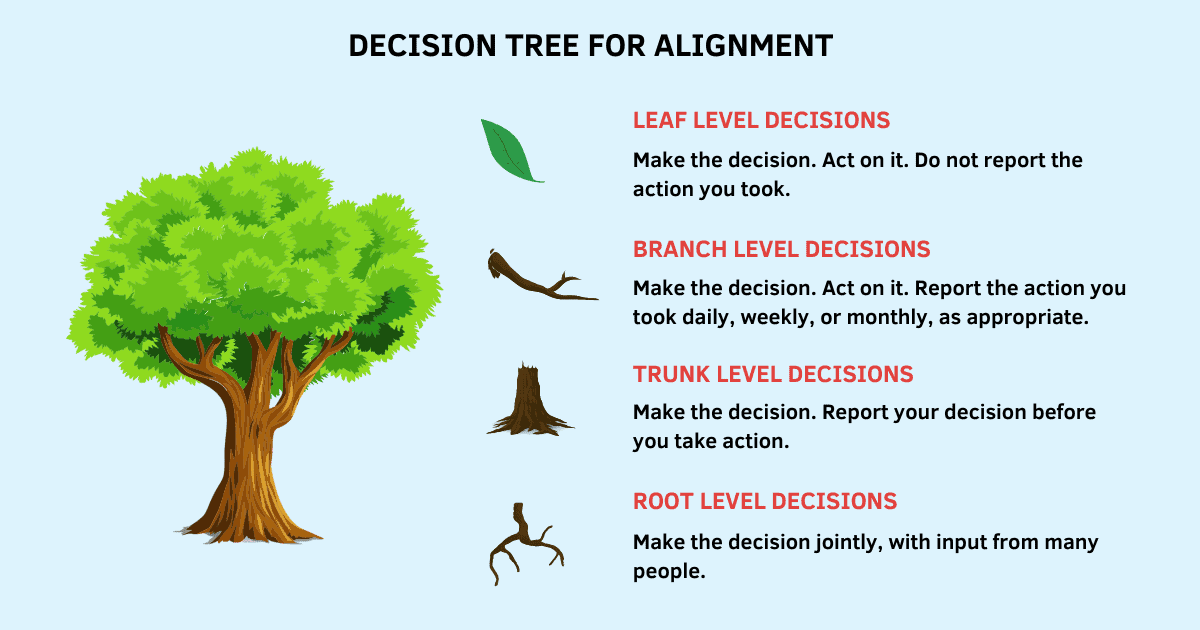
No trust in the team. Always doing shit themselves. No discussion. Backdoor discussions. Always bending to the will of management. Everything is “important”/“critical”. It’s micromanaging to the worst degree.
At the same time, I would likely fail in the same way if given the position. Albeit, to a much lesser degree. I think management often puts us in these impossible positions without any good reason other than “to look good to X.” What’s even worse if it’s was just to earn fucking brownie points with some no name mid level director.
This is why I think unions in tech would be great. To set realistic expectations, approach management from a collective point of view.
Unfortunately companies today only aim to get that VC money with a quick exit and IPO. I think the general sentiment amongst the vultures is a union would make the quick exit less of a reality.